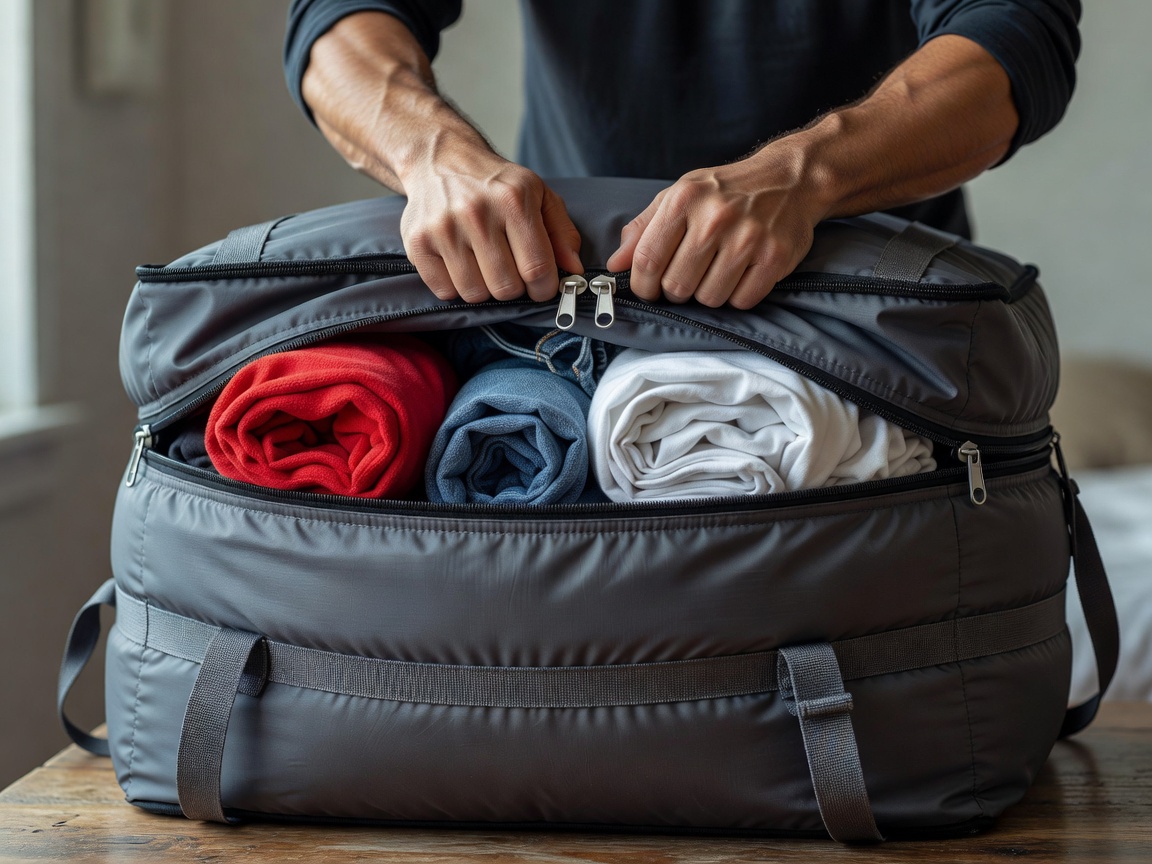
If you have ever tried to sit on your suitcase to force the zipper shut, compression packing cubes are engineered specifically for you. While standard packing cubes excel at organization and preventing clothes from shifting, compression cubes go one step further by mechanically removing excess air from your clothing, significantly reducing its physical footprint.
How Compression Cubes Work
A standard packing cube generally features one zipper that opens the top lid. A compression cube, by contrast, features two distinct zipper tracks. The first zipper functions normally, allowing you to open the cube and place your folded or rolled clothes inside. The magic happens with the second zipper.
The second zipper wraps around the perimeter of the cube's side wall. Once your clothes are inside and the main compartment is shut, you pull the secondary perimeter zipper. As you pull it, it gathers the side fabric together, forcefully pressing the top lid down toward the base. This squeezes out ambient air trapped in bulky items like fleece jackets, sweaters, and denim.
In optimal scenarios—such as packing down jackets or heavy wool sweaters—you can reduce the volume of your clothing by up to 50%. For denser items like jeans and t-shirts, the reduction is closer to 15-20%.
The Weight Penalty
It is vital to understand that compression packing cubes reduce volume, not weight. In fact, due to the heavy-duty zippers required to withstand the physical stress of compression, along with the extra fabric for the expandable sidewalls, compression cubes are inherently heavier than standard alternatives.
Furthermore, because you can fit more items into a smaller bag, it is remarkably easy to exceed airline carry-on weight limits. A densely packed carry-on full of compressed clothing will feel akin to a brick. Budget airlines strictly weighing cabin baggage may penalize you if you equate small size with light weight.
Advantages
- Frees up substantial space in luggage for souvenirs or gear.
- Forces bulky winter wear into manageable shapes.
- Reduces friction between clothes, minimizing wrinkles.
- Keeps items incredibly secure during turbulent travel.
Disadvantages
- Heavier base weight than standard cubes.
- Can encourage overpacking and exceeding weight limits.
- Often more expensive due to extra hardware.
- Fabric can bunch around the compression zipper if not careful.
How to Choose the Right Compression Cube
When selecting a compression cube, the most critical component is not the fabric, but the hardware. The zippers undergo immense tension. Look for branded zippers, such as YKK, preferably in a coil format rather than vislon, as coil zippers corner much more smoothly when under tension.
Additionally, consider the fabric structure. Thin silnylon might save weight, but under compression tension, it can warp. A mid-weight ripstop nylon often provides the best balance between structural integrity and weight savings.
Conclusion
For one-bag travelers looking to stretch a 30-liter backpack into a two-week wardrobe, or cold-weather tourists dealing with bulky knitwear, compression packing cubes are a non-negotiable tool. If, however, you strictly fly budget airlines and pack summer clothes, standard cubes may serve you better without the weight penalty.